We are faculty, staff, and students, committed to helping Hawaiʻi through design. Led by the University of Hawaiʻi at Mānoa School of Architecture, UHCDC supports unique collaborations that address critical issues facing our communities.
Our story
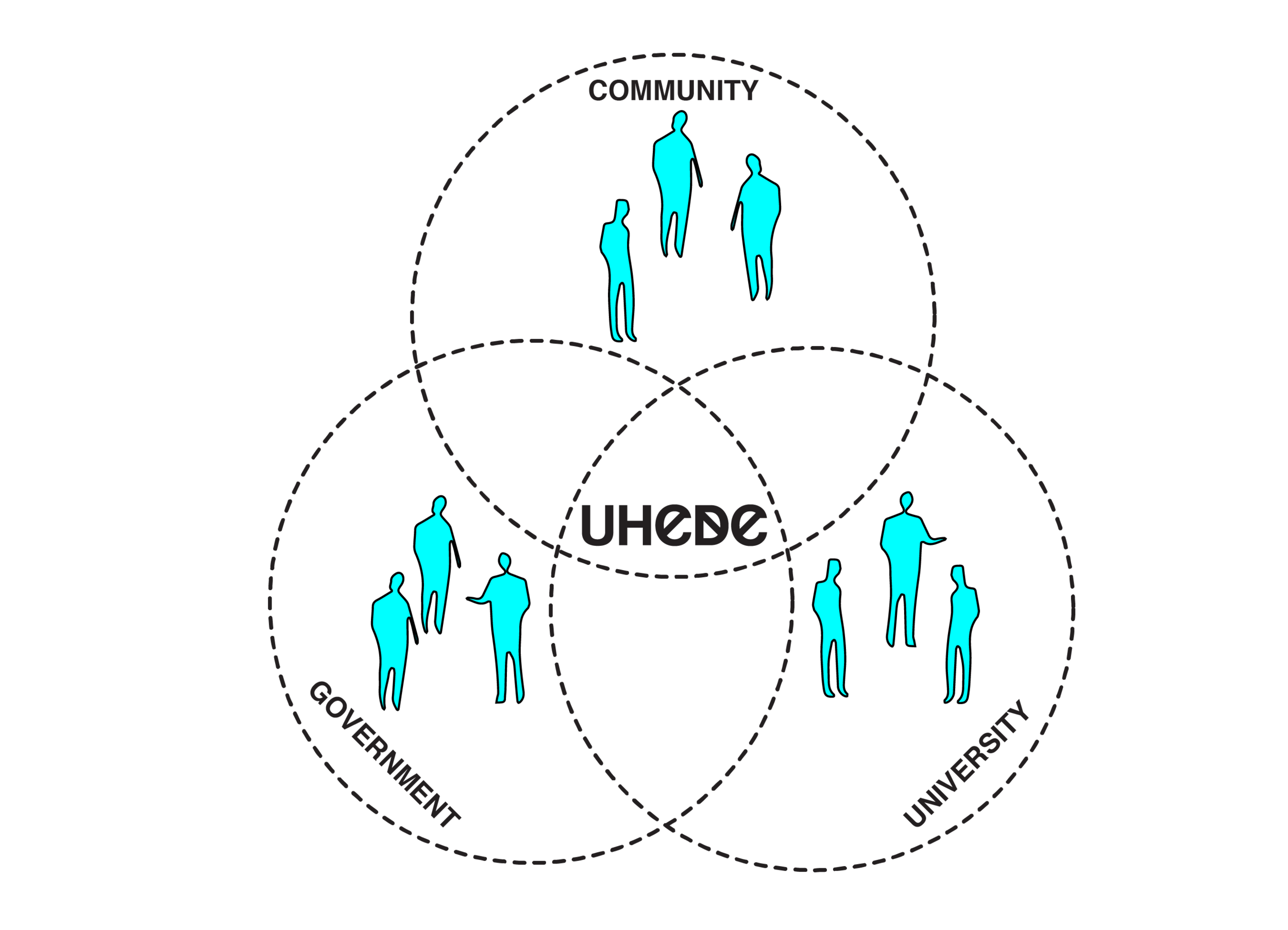
In 2016, the School of Architecture established the University of Hawaiʻi Community Design Center, building on four decades of education and public service to Hawaiʻi and the Asia-Pacific region. Positioned to operate at the intersection of government, university, and community stakeholders, the center has generated employment opportunities for over a hundred multi-disciplinary faculty, staff, and students working on UHCDC funded projects. UHCDC affiliated faculty members have also engaged hundreds of students through UHCDC project-related academic courses. We look forward to exploring the full potential of this public sector, public-interest practice, and expanding our role as an effective design resource for Hawaiʻi. We welcome your support and participation and invite you to learn more.

Who we are
We are a collective of University of Hawai‘i faculty, staff, and allied professionals across university departments and disciplines, assisted by student interns and recent graduates. UHCDC provides a platform for collaboration on public interest built environment work.
Who we work with
We partner with state, city, and county agencies, the University of Hawai‘i, non-profit organizations, and community groups. Our intergovernmental status allows us to work nimbly with government agencies.

How we work
We build relationships internally by gathering university topic area experts, and externally by engaging project stakeholders, community members, and civic leaders to ensure that diverse perspectives are reflected and integrated into public serving projects.

Who we serve
We are a Hawai’i-serving resource, with the aim of supporting work across all of our islands, understanding the diversity of our communities and the unique challenges affecting our remote island state.

What we do
We provide alignment, engagement, communication, research, planning, and design services that provide stakeholders with data, analysis, prototypes, insights, resources, and visualizations that help to collectively guide and inform next steps.

How we teach
As a teaching practice, similar to a teaching hospital, our work provides applied learning, leadership, and employment opportunities for students and new graduates, connecting their education and kuleana to projects that serve our communities.
Our Values
Community + Equity
We collaborate with institutions and communities to support more inclusive, equitable, and effective practices, processes, and environments that are designed for all.
Sustainability + Resilience
The challenges we face as a remote island community frames our foundational commitments to social, cultural, economic, and ecological sustainability and resilience.
Education + Leadership
We are a university-led teaching practice. Our work prepares students to be civic practitioners and future leaders in our built environment disciplines.
Our Approach
Collaborative design
We see design as a collective action, one that benefits from internal and external collaboration to ensure that diverse knowledge and perspectives guide our process.
Applied research
We draw from the deep knowledge network of the university, applying established and emergent research expertise and methodologies across disciplines to our work.
Hawaiian place of learning
We learn from the values, knowledge, and practices of our host culture and are called to action by the ethos of aloha ʻāina.
Remote island context
Hawai’i is home to one of the most remote urban populations in the world. Our isolation and vulnerability underscore the importance of our sustainability and resilience aims.
A cultural perspective
Our diverse multi-ethnic community offers a rich context to explore the role of race, culture, and identity in the planning and design of the built environment.
Building relationships
We understand that cultivating and maintaining meaningful relationships is key to long term impact.
Our process
While every project is unique and each process is developed in coordination with our partners and stakeholders, there are some components that most projects share in common.
Active listening - Meeting people and understanding their experience and perspectives.
Understanding place – We use a variety of methods to understand our past, present, and projected future social, cultural, political, economic, and ecological contexts.
Engaging Stakeholders – From talk-stories to town halls, our work aims to bring people and perspectives together around common goals. See our outreach page for more information
Applied research - We connect our community-engaged findings to other forms of disciplinary research to support reciprocal exchange of knowledge.
Participatory planning and design - Through participatory methods we invite stakeholders to co-design solutions with us.
Visioning – The power of design is in the visioning of future solutions, scenarios, and frameworks that guide our decisions today.
Share/Repeat - We share, we revise, we share again.
Communicate – Through our reports, presentations, briefings, project websites, or other media we share the collective efforts of this work.
Proof of Concept Services

Proof of concept involves pre-procurement research, planning, and design services that can include, but is not limited to stakeholder alignment, community engagement, applied research, design investigations, prototyping, and preliminary costing to better define and fund projects ahead of contracting a professional planning and design team.
Our Impact
Partners
30+
Federal, State, and City & County agency and non-profit clients or granting agents worked with our UHCDC ohana.
UH faculty
25+
Faculty members across eight university departments applied teaching and research efforts to UHCDC projects.
Courses taught
50+
courses at the University of Hawai’i at Manoa were focused on projects related to UHCDC partners .
Students employed
100+
student assistants across departments received over 20,000 hours of paid internship and credit hours applicable to the requirements for architectural licensure.