ARCH 743: Architecture Studio IV Urban Design
For decades, Kapolei was designed and conceived of as a suburban relief valve for Honolulu, or a second city characterized by car-dependent sprawl and acres of heat-absorbing asphalt. The evolution we see today in East Kapolei, specifically within the Hoʻopili master plan, represents a radical and prospective departure. We see development shifting from Transit-Adjacent Development [buildings near a station] to a Transit-Oriented Community [TOC], with the rail station serving as the village heart rather than a peripheral utility. With the expansion of the Skyline rail system [as it is now called] into its second phase, now connecting the West Oʻahu plain through the Honolulu International Airport to the Kalihi Transit Center, the city has established a high-capacity, driverless circulation backbone that defies traditional or otherwise established geographic and political constraints. Quickly shaping possibilities for increased connectivity and economic development, the Skyline is poised to become an active infrastructure of mobility that, with time, will undoubtedly and fundamentally shift the island’s daily transit and community development and distribution pattern. But that capacity for growth; for new places, comes with increased potential for ecological disturbance and further fragmentation of Oahu’s sense of itself.
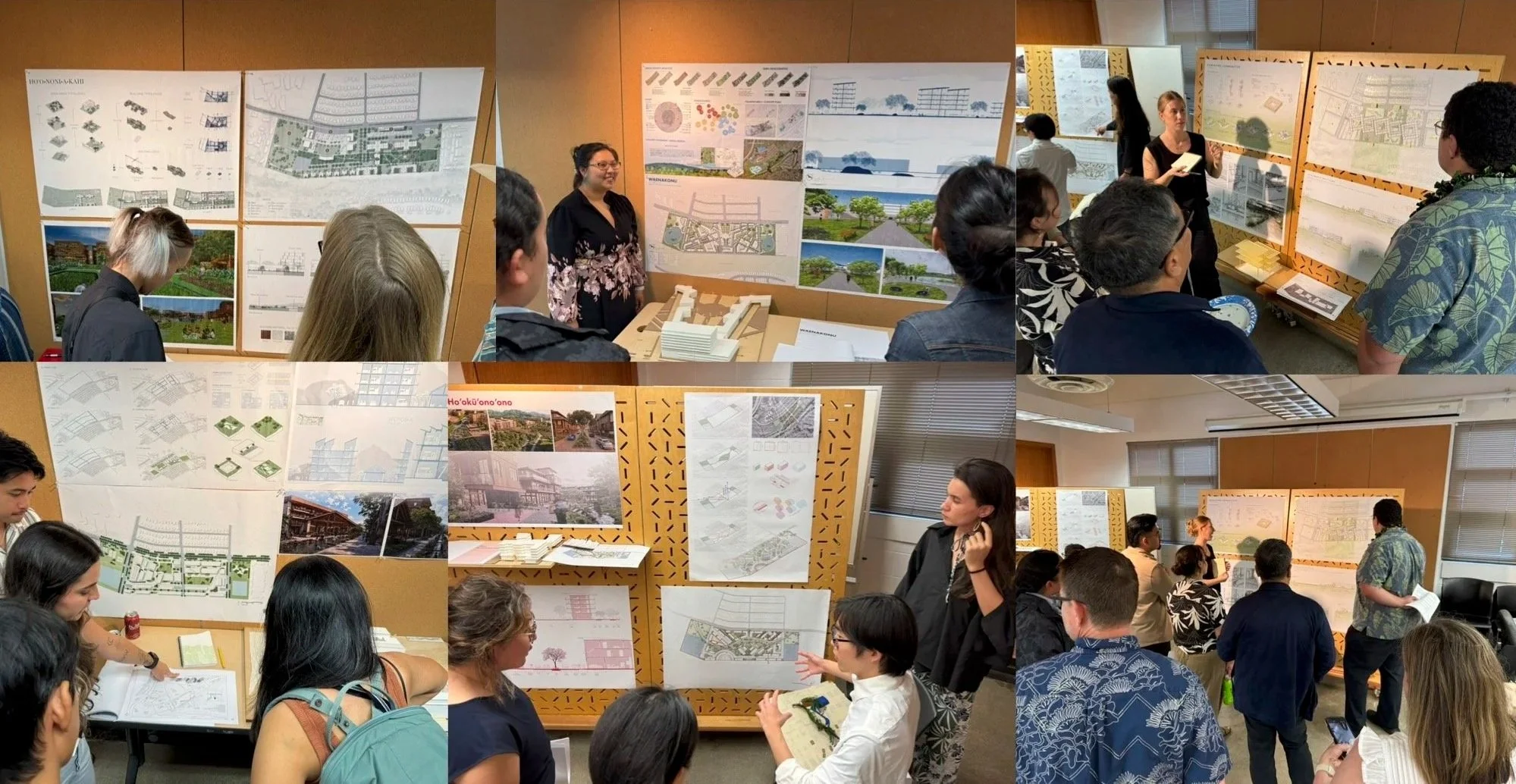
In that context, students conducted research and developed conceptual urban design strategies and programs for the design of housing and community open space in East-Kapolei [EKII-II], a Department of Hawaiian Homelands [DHHL] Project in early phases of implementation. We focused on the conceptual design of prototypical housing and open-space/landscape typologies as expandable units; their clustering and adjacencies with environmental systems; and the synthesis of ecological urban and community design strategies. Final projects integrated principles of water-sensitive urban design [WSUD] within the tropical post-monoculture agricultural landscape/context of Leeward Oʻahu. Project designs prioritize car-lite, or car-free programs and lifestyles, leveraging the 20-minute connection from West Oʻahu to the urban core. Other alternate models of asymmetric mobility like bicycle or car sharing, public EV charging stations, etc., are explored for potential applications and corresponding reductions in parking demand.
Partner: Department of Hawaiian Home Lands
Instructor: Simon Bussiere
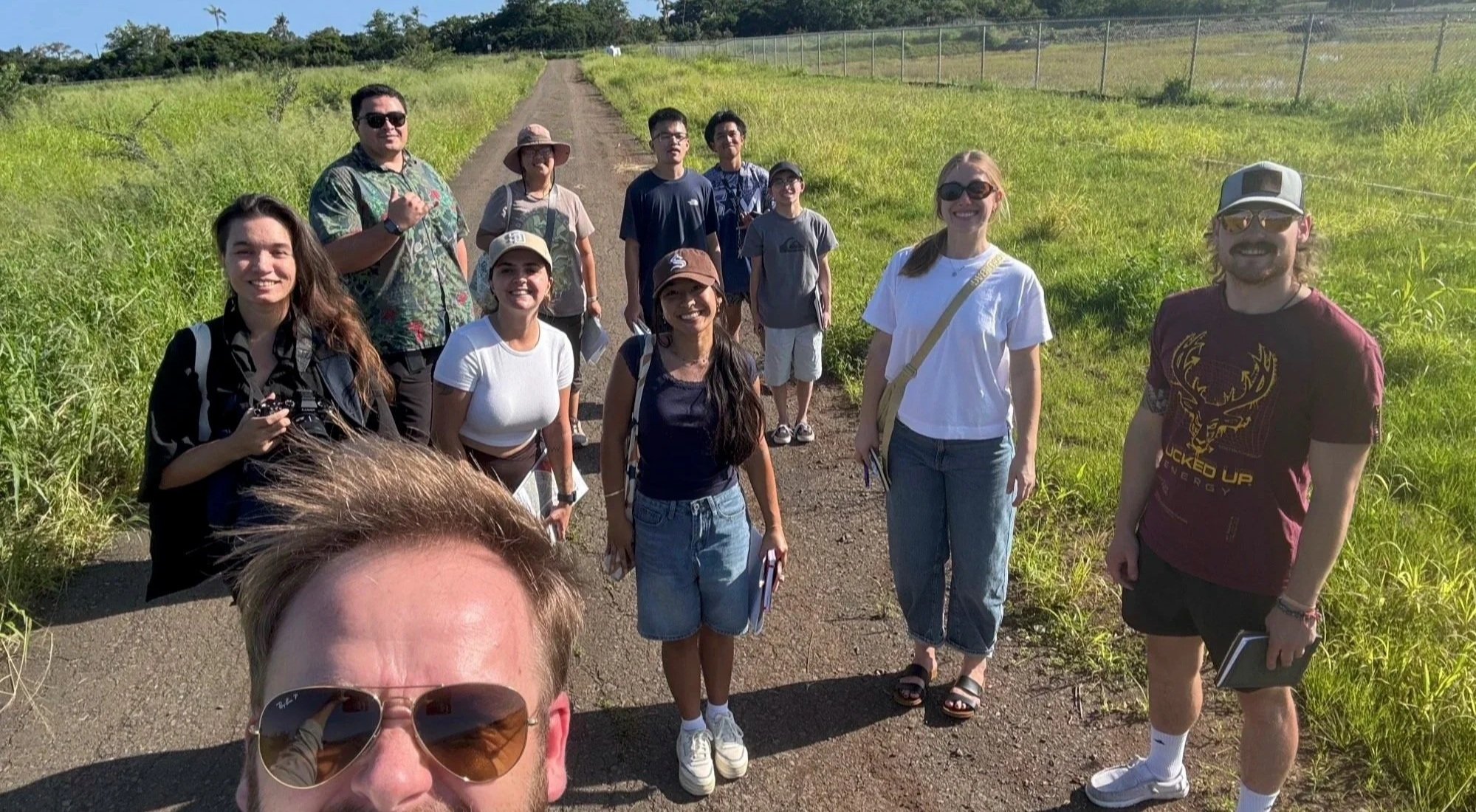
Students: Brandi Baligad, Anson Kimura, Leticia Lidgard, DElle Martin, Branden Nakagawa, Kody Robson, Sierra Spears, Joshua Tolentino, Sarah Uyeda
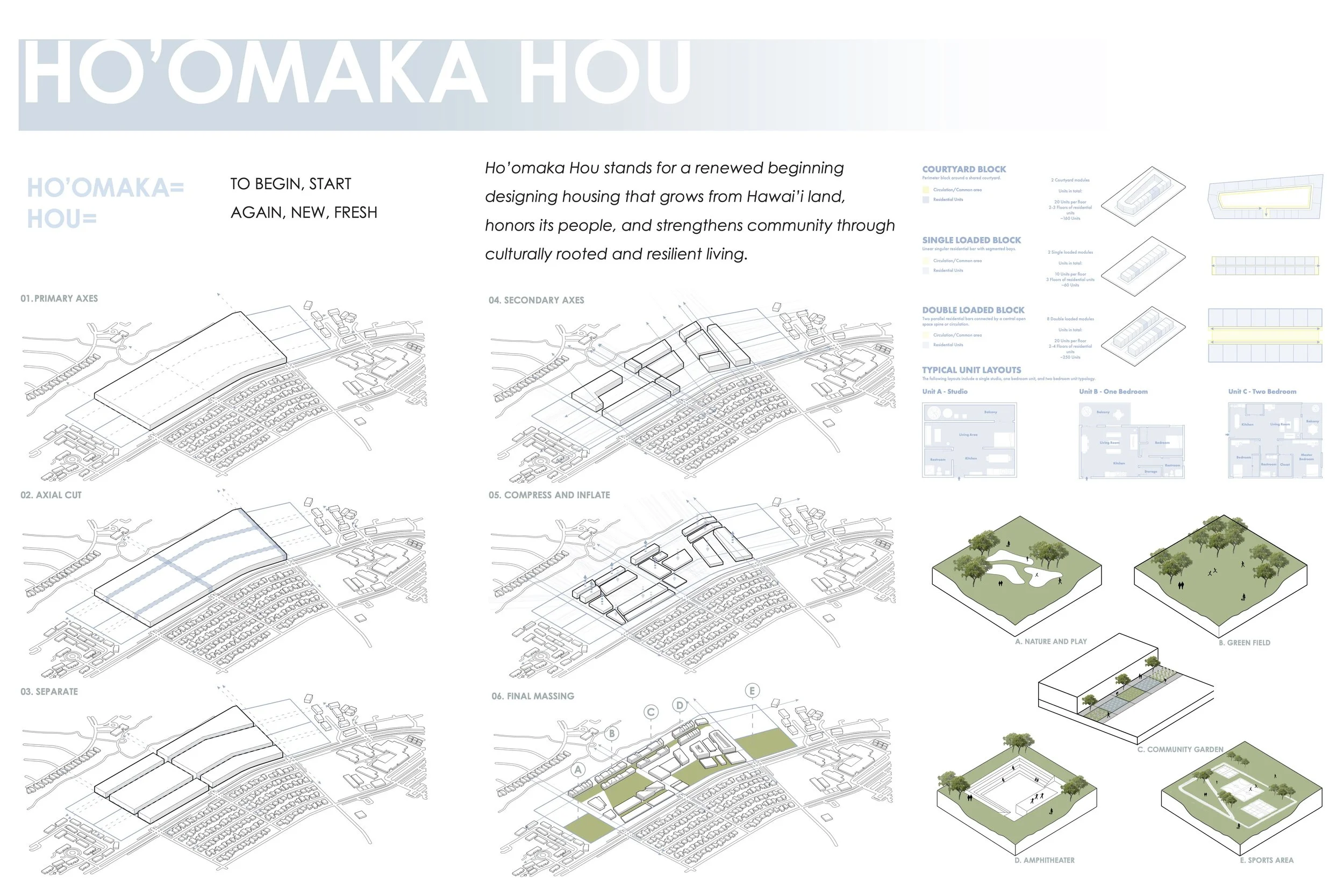
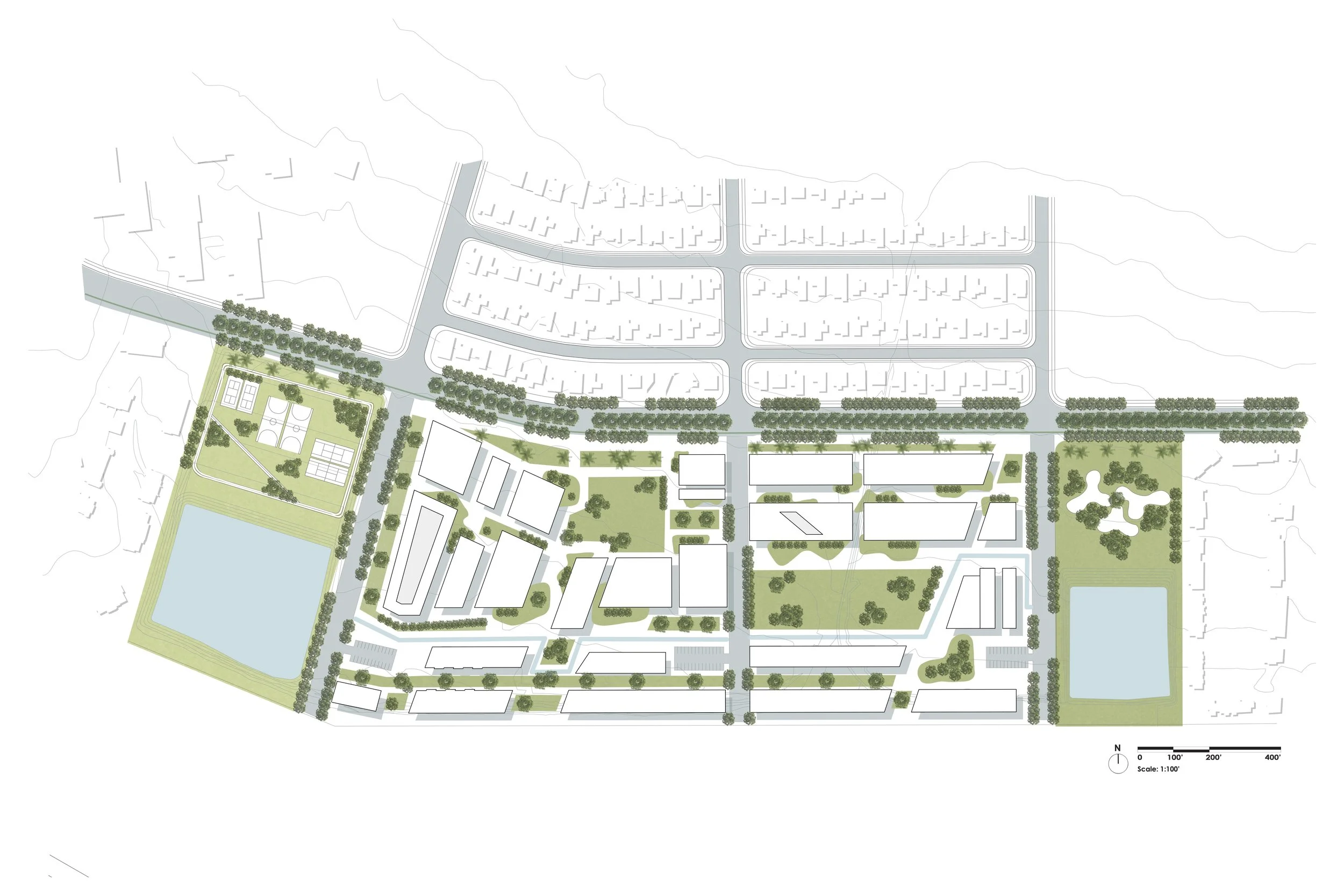
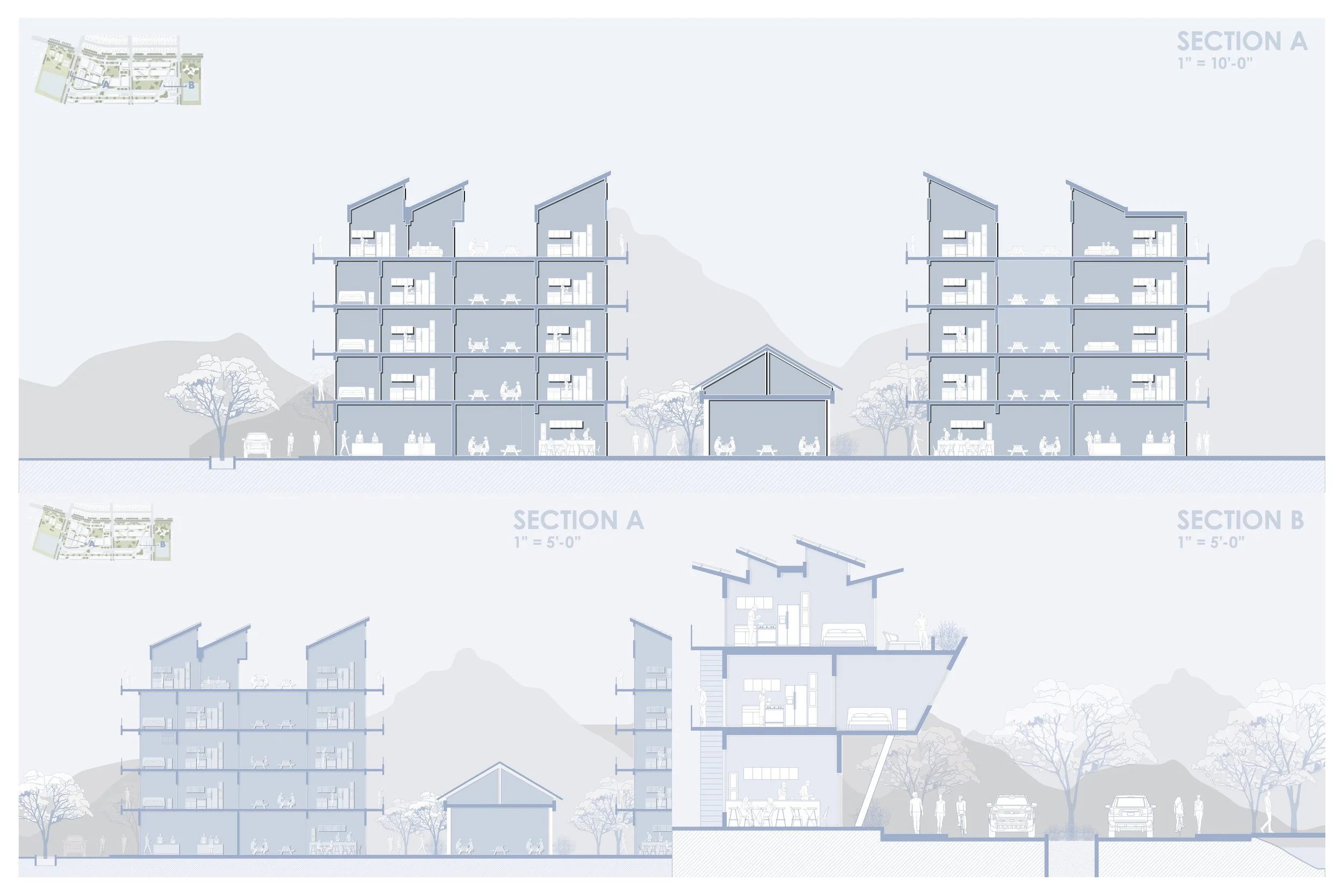
Team: Joshua Tolentino and Leticia Lidgard
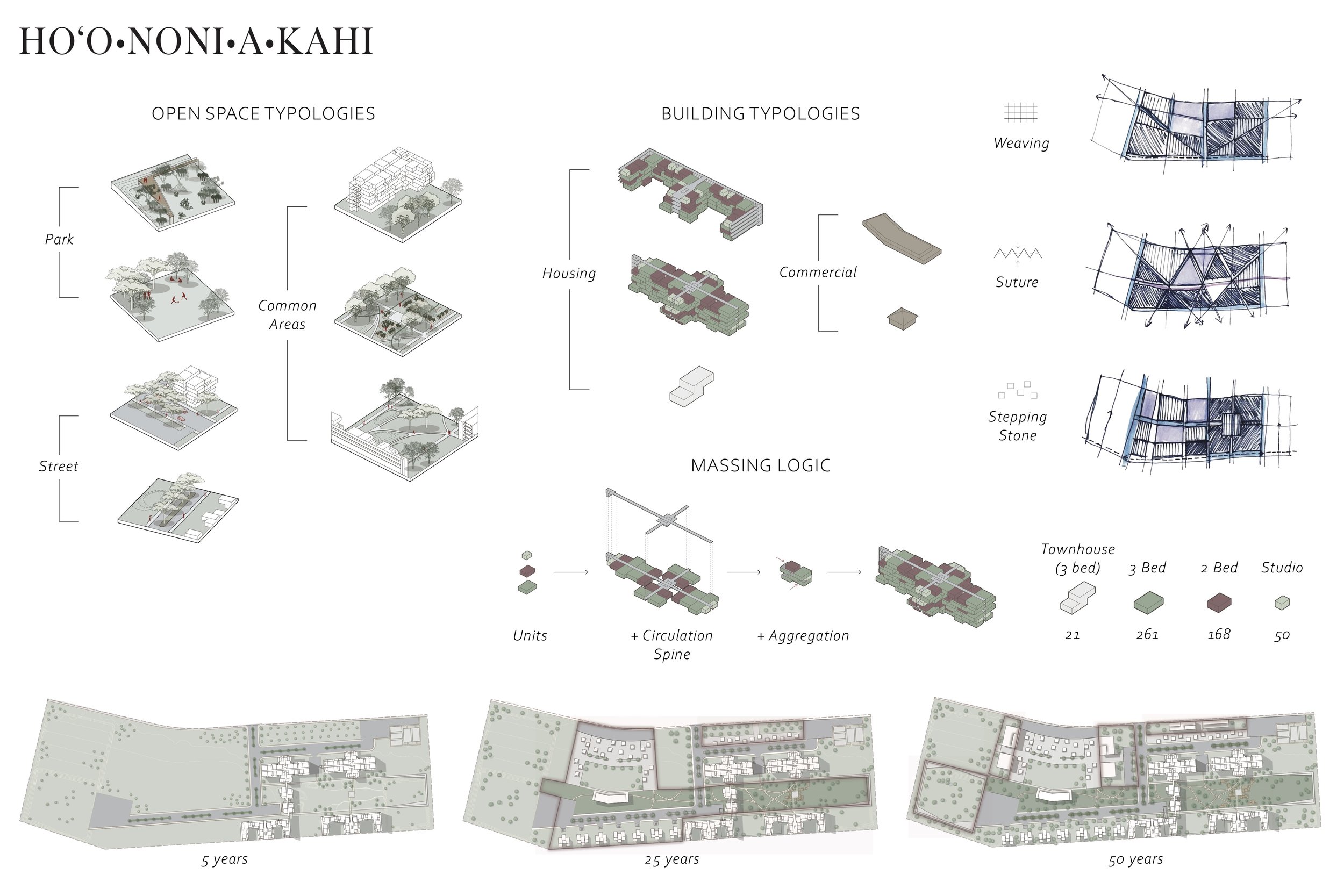
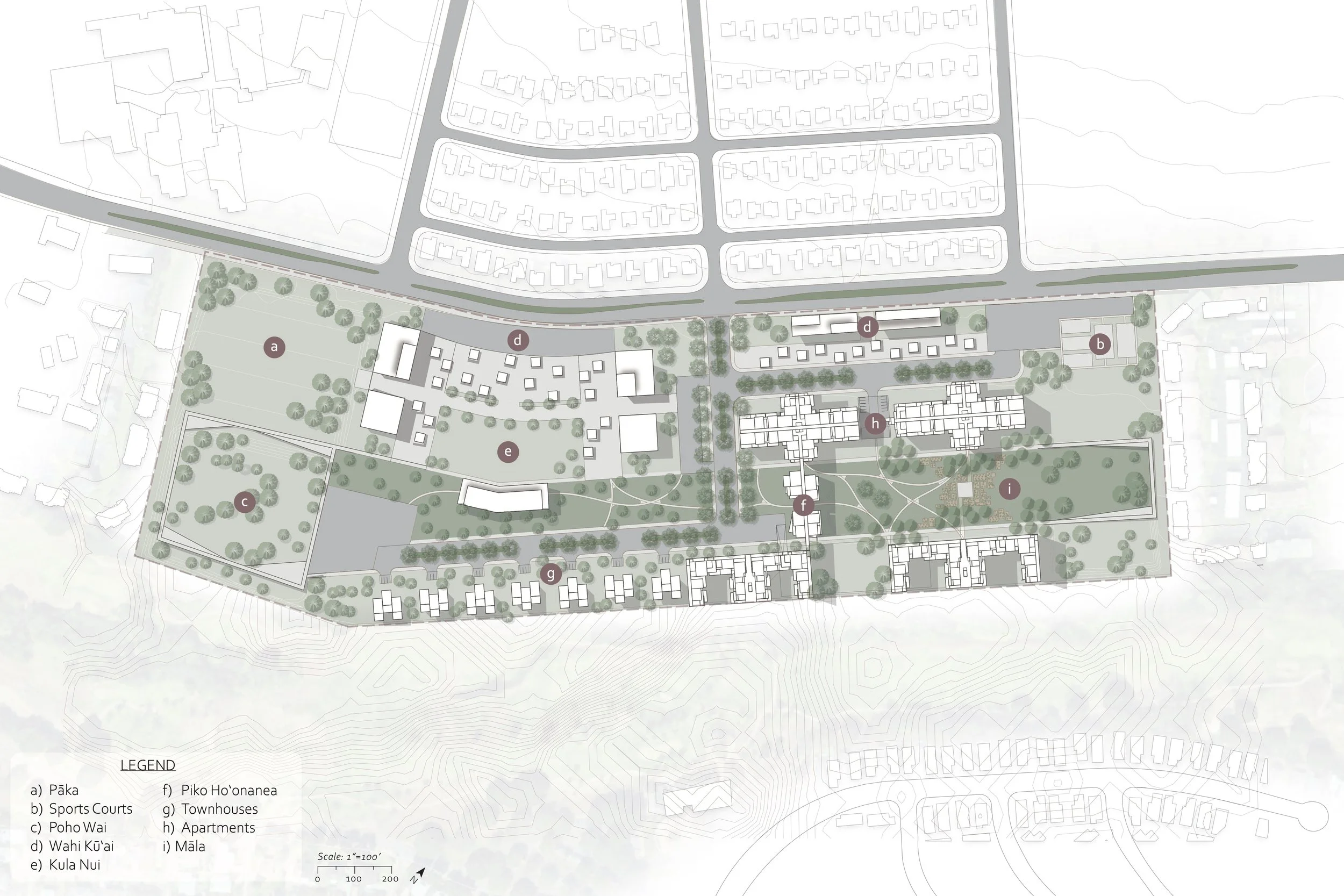
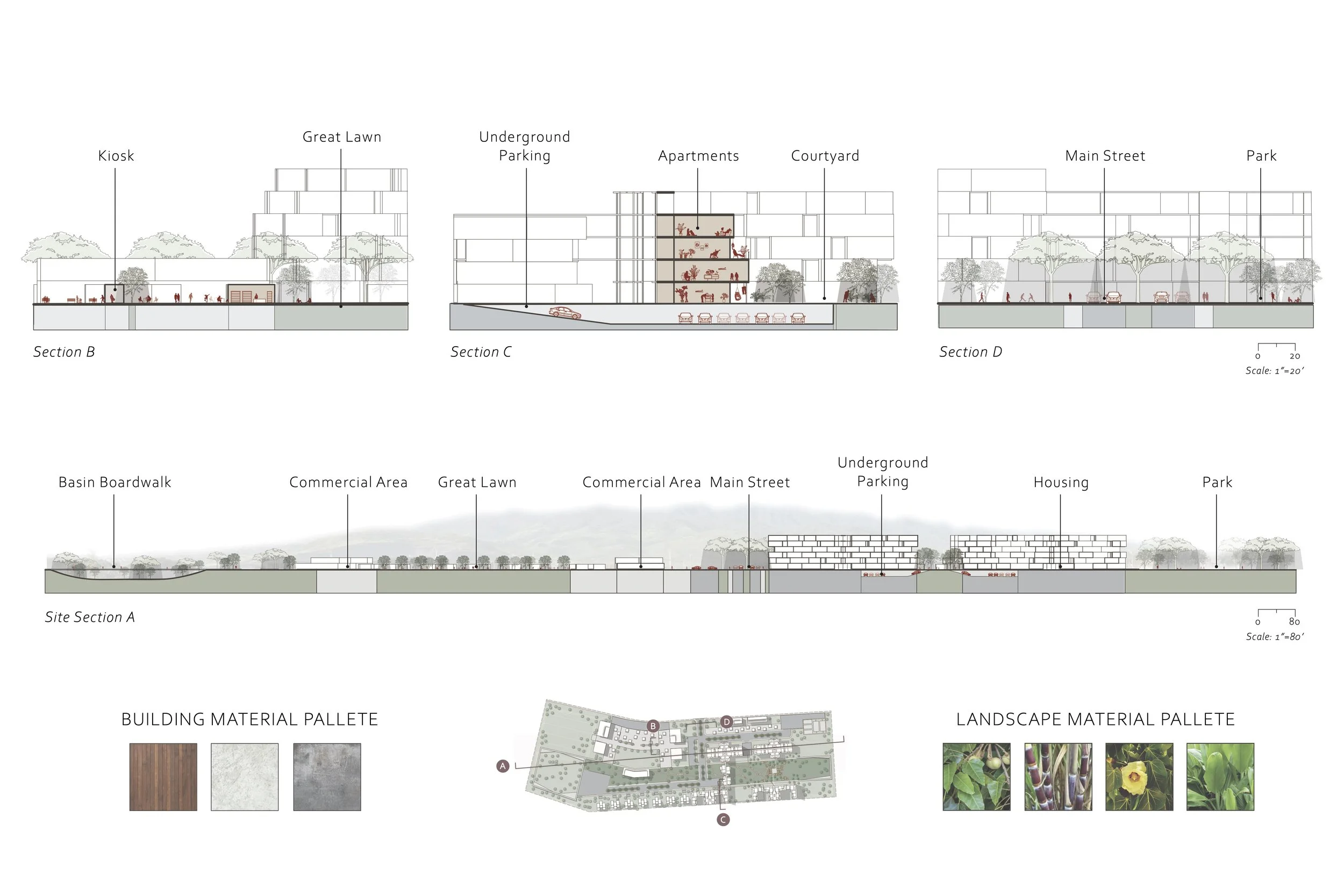
Team: Brandi Baligad and Kody Robson
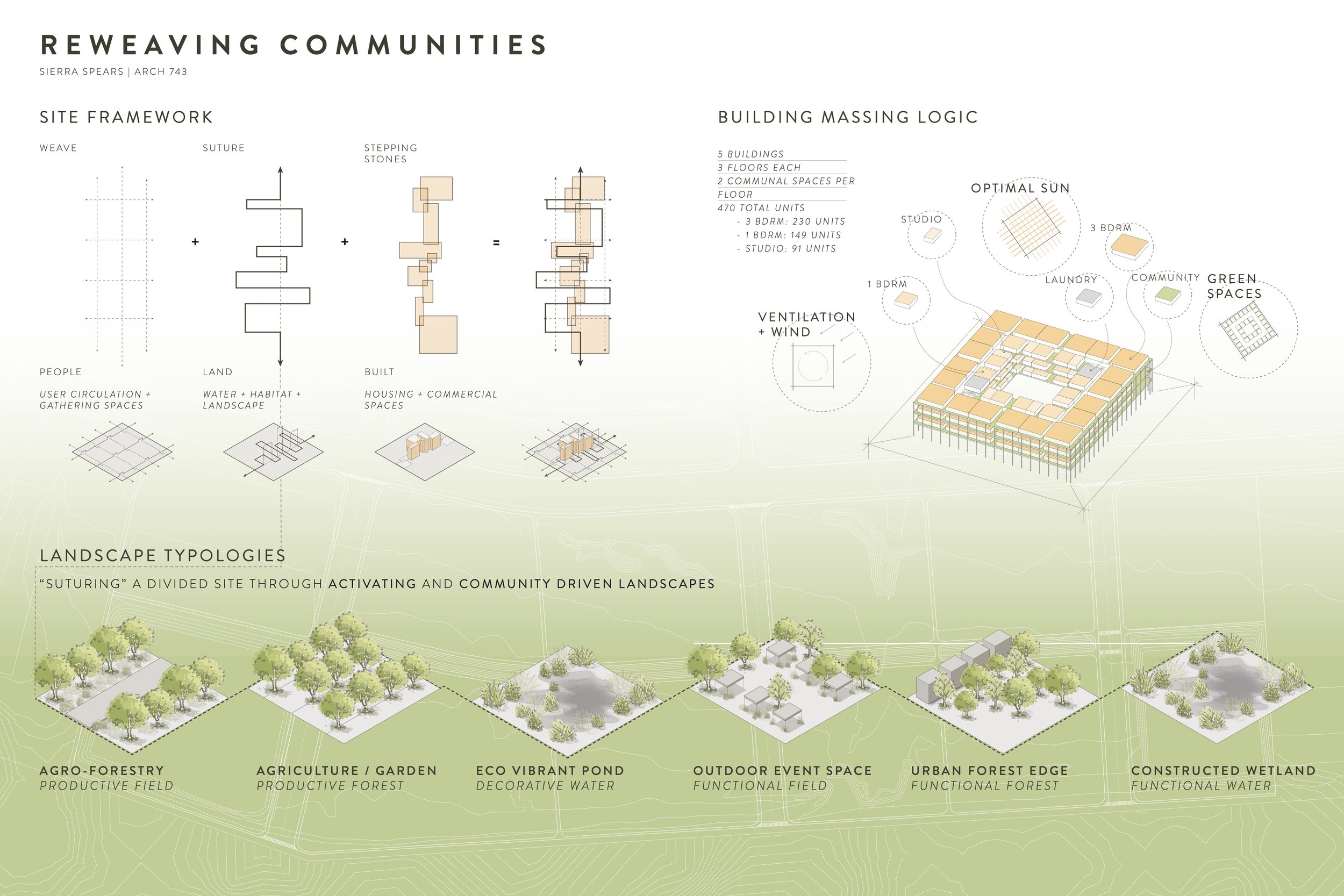
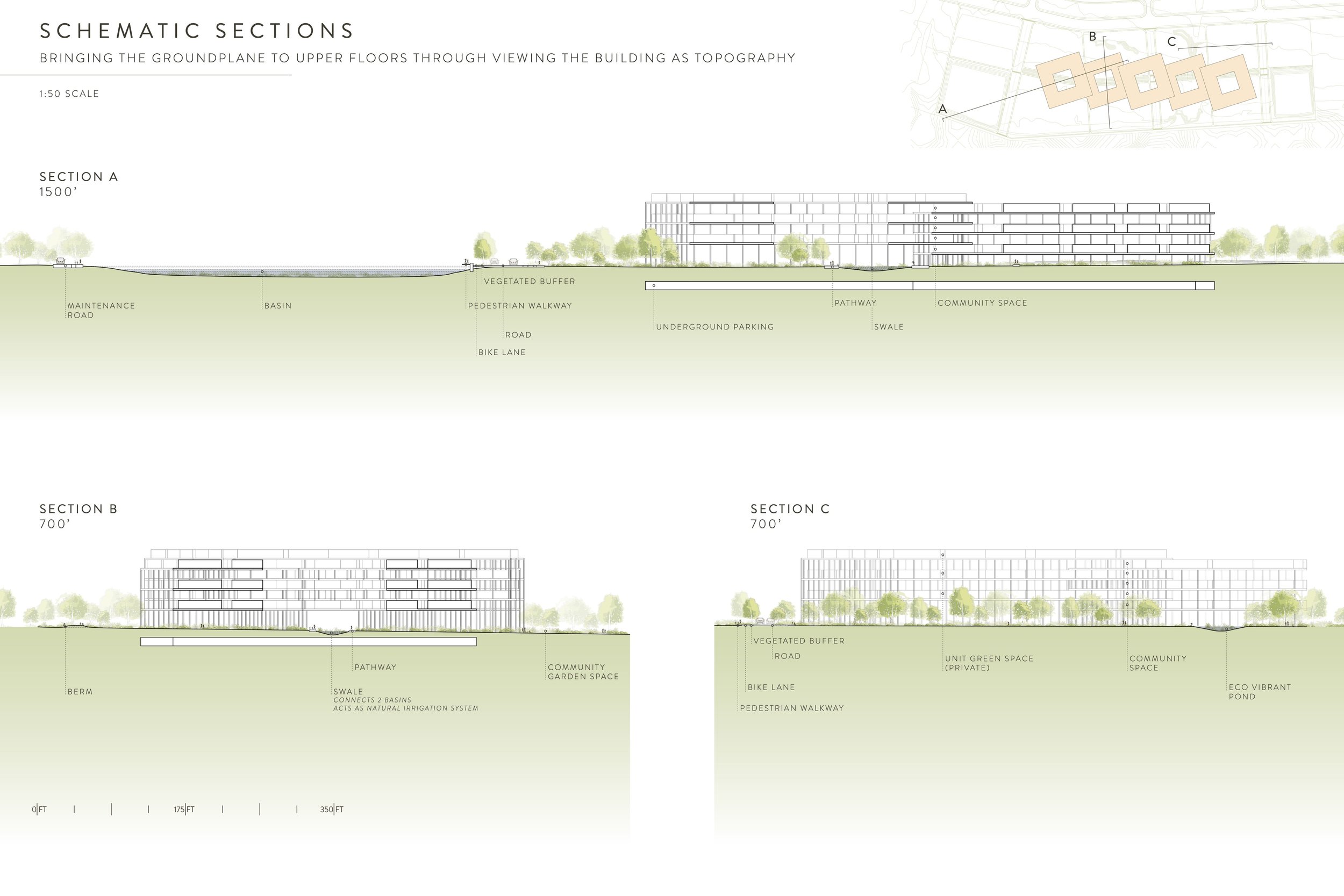
Team: Sierra Spears